Measles is back in the headlines — and for serious reasons. In 2025 alone, the United States reported over 2,288 confirmed measles cases across 45 states, marking the largest measles crisis the country has seen in a decade. Globally, the measles virus is spreading faster than it has in 25 years.
Whether you’re a parent, a traveler, a healthcare worker, or simply someone who wants to stay informed, this guide covers everything you need to know about measles — from early signs and measles symptoms in children and adults, to measles treatment, the measles vaccine, and how to prevent measles infection.
Let’s break it all down clearly, without the confusion.
Measles: Symptoms, Causes, Vaccine and Prevention — A Complete Global Guide
Measles is a highly contagious viral disease that remains a serious global health threat. In 2025, outbreaks spread across dozens of countries, affecting thousands of unvaccinated individuals. This guide explains everything you need to know — from early warning signs to the measles vaccine, treatment options, and global prevention strategies.
What Is Measles?
Measles, medically known as rubeola, is a highly infectious viral disease caused by the measles virus — a single-stranded RNA virus belonging to the Paramyxoviridae family. It primarily targets the respiratory tract and the immune system, and produces the characteristic fever and rash that most people associate with the disease.
The measles virus was once considered eliminated in many high-income countries. But rising vaccine hesitancy and disruptions to immunization programs — particularly during and after the COVID-19 pandemic — have caused a dangerous global resurgence. Today, every WHO region reports rising measles case numbers.
Measles disproportionately affects communities with low vaccination coverage, malnourished populations, and individuals with compromised immune systems. It is preventable — and yet it continues to kill tens of thousands of children every year globally.
Is Measles Contagious? How Does Measles Spread?
Yes — measles is one of the most contagious infectious diseases ever documented. Its basic reproduction number (R0) is estimated between 12 and 18, meaning one infected person can potentially infect 12 to 18 others in a fully susceptible population. For comparison, seasonal influenza has an R0 of about 1.2 to 1.4.
If one person has measles, up to 90% of unvaccinated people nearby will become infected. The virus travels through airborne droplets released when an infected person coughs, sneezes, breathes, or speaks. Crucially, the measles virus can survive in the air and on surfaces for up to two hours after the infected person has left the room.
A person with measles is contagious from four days before the rash appears to four days after. This means they can unknowingly spread the virus before experiencing any visible symptoms — making containment extremely difficult without vaccination.
Travels through respiratory droplets when an infected person coughs or sneezes
The virus lingers in the air long after an infected person has left an area
Contagious 4 days before the rash appears — spreads before symptoms are visible
Early Signs of Measles: What to Watch For
The measles infection follows a predictable timeline. After exposure, an incubation period of 10 to 14 days passes before symptoms appear — though it can range from 7 to 23 days in some cases.
The disease begins with a prodromal (pre-rash) phase that can easily be mistaken for a common cold or the flu. This is the stage when the virus is already replicating and the person is highly contagious.
Early Warning Signs (Prodromal Phase):
- High fever — typically above 101°F (38.3°C), sometimes reaching 104–105°F
- Persistent dry cough — often described as harsh or barking
- Runny nose (coryza) — copious nasal discharge
- Red, watery eyes (conjunctivitis) — eyes may become sensitive to light
- Koplik's spots — tiny white or blue-white spots with a red base found inside the mouth (especially on the inner cheeks); these are a diagnostic hallmark of measles and appear 1–2 days before the rash
Measles Symptoms: Children vs Adults
Both children and adults experience measles in broadly similar ways. However, the severity, risk of complications, and recovery time can differ significantly based on age, vaccination status, and overall health. The table below summarises the key differences.
| Feature | In Children | In Adults |
|---|---|---|
| Fever Level | High — 103 to 105°F | High and often more severe or prolonged |
| Rash Appearance | Day 3–5 of illness | Day 3–5 of illness |
| Koplik's Spots | Common | Common |
| Major Complications | Pneumonia, ear infections, blindness | Pneumonia, encephalitis, hepatitis |
| Highest-Risk Group | Children under 5, especially infants | Immunocompromised and pregnant adults |
| Typical Recovery | 7–10 days | 7–14 days |
| Hospitalization Risk | High in under-5s | High in unvaccinated adults over 20 |
Measles symptoms in adults who are unvaccinated tend to be more severe and carry a higher risk of serious complications such as encephalitis (brain inflammation). Pregnant women who contract measles face risks including miscarriage, premature birth, and low birth weight.
The Measles Rash — What Does It Look Like?
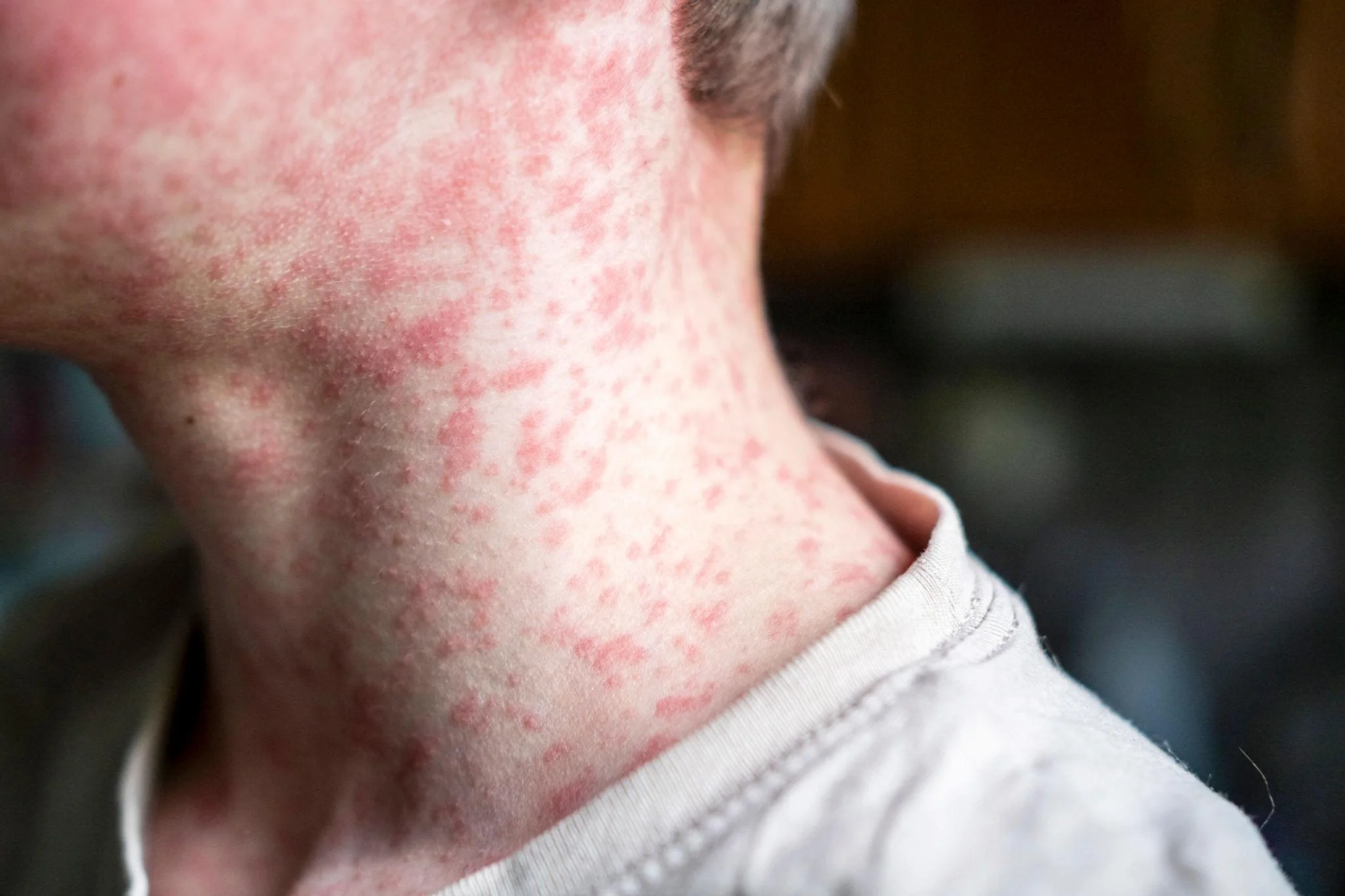
The measles rash is perhaps the most well-known feature of the disease. It typically appears around 3 to 5 days after the first symptoms, starting at the hairline and face before spreading progressively downward across the body.
Rash Progression (Head to Toe):
- Begins at the hairline and forehead
- Spreads to the face, neck, and behind the ears
- Moves to the trunk and upper arms
- Reaches the lower limbs and feet over 3–4 days
- Spots may merge into large, flat, blotchy patches
- Rash lasts about 5 to 6 days, then fades in the same downward order
The measles rash is made up of flat red or reddish-brown spots (maculopapular rash). Unlike chickenpox, the measles rash is typically not itchy — a key differentiating feature. The fever tends to peak around the time the rash is most widespread and then gradually decreases.
Complications of Measles
Measles is far more than a childhood rash. It weakens the immune system significantly — a phenomenon known as "immune amnesia" — leaving the body vulnerable to other infections for weeks or even months after recovery. Serious complications are not rare.
| Complication | Who Is Most at Risk | Frequency / Severity |
|---|---|---|
| Pneumonia | Children under 5, immunocompromised | Most common cause of measles death |
| Ear Infection (Otitis Media) | Young children | Common; can cause permanent hearing loss |
| Encephalitis (Brain Swelling) | Adults and older children | 1 in 1,000 cases; can cause brain damage |
| Diarrhoea and Dehydration | Malnourished children in low-income countries | Common in developing regions |
| Corneal Ulceration / Blindness | Vitamin A-deficient children | Leading cause of measles-related blindness |
| SSPE (Subacute Sclerosing Panencephalitis) | Children who had measles before age 2 | Rare but always fatal; appears 7–10 years later |
| Miscarriage / Preterm Birth | Pregnant women | Significant risk in unvaccinated mothers |
Individuals with HIV who are not immune to measles face a significantly elevated risk of severe pneumonia or encephalitis. Similarly, people undergoing cancer treatment, organ transplant recipients, and those on immunosuppressive therapy are at high risk for life-threatening measles complications.
Measles Diagnosis and Treatment
How Is Measles Diagnosed?
A healthcare provider will typically suspect measles based on the clinical presentation — particularly the combination of fever, cough, conjunctivitis, Koplik's spots, and the characteristic descending rash. Diagnosis is confirmed through:
- Serology (blood test) — detection of measles-specific IgM antibodies; most reliable 3–4 days after rash onset
- PCR testing — confirms the presence of measles virus genetic material; very accurate in early infection
- Throat or nasopharyngeal swab — collects virus for laboratory identification
- Urine sample — can also be tested, especially in children
Measles Treatment: What Works?
There is currently no specific antiviral drug that eliminates the measles virus. Treatment is focused entirely on supportive care — managing symptoms and preventing or treating complications early.
- Rest and hydration — essential to aid recovery and prevent dehydration
- Fever management — acetaminophen (paracetamol) or ibuprofen to lower fever; aspirin should never be given to children
- Vitamin A supplementation — WHO recommends two doses given 24 hours apart for all children and adults with measles; this helps prevent eye damage, blindness, and reduces the risk of death
- Antibiotics — only prescribed if a secondary bacterial infection (such as pneumonia or ear infection) develops; antibiotics do not treat the measles virus itself
- Hospitalization — required for severe cases, especially those involving difficulty breathing, persistent high fever, or neurological symptoms
The Measles Vaccine: Benefits, Schedule and Side Effects
The measles vaccine — delivered as the MMR (Measles, Mumps, Rubella) combination vaccine — is one of the safest, most effective, and most cost-efficient vaccines ever developed. A single vial costs less than US$1 and has saved millions of lives worldwide since the 1960s.
Measles Vaccination Benefits
Effectiveness after
1 dose of MMR
Effectiveness after
2 doses of MMR
- Provides long-lasting and potentially lifelong immunity against measles
- Protects community members who cannot be vaccinated — including infants under 6 months and immunocompromised individuals (herd immunity)
- Significantly reduces the risk of severe complications and death
- Costs less than US$1 per child — one of the highest-value public health investments globally
Recommended Vaccination Schedule (Global Guidelines)
| Dose | Recommended Age | Notes |
|---|---|---|
| First Dose | 9 months (in high-risk countries) or 12–15 months | Earlier in countries with active measles transmission |
| Second Dose | 4–6 years | Can be given as early as 1 month after first dose |
| Travelling Infants (6–11 months) | Before international travel | Additional early dose; does not replace routine doses |
| Unvaccinated Adults | Any age | Two doses, at least 28 days apart; check with your doctor |
Measles Vaccine Side Effects
The MMR vaccine is extremely safe. Most side effects are mild, temporary, and far less dangerous than measles itself.
- Soreness or redness at the injection site (very common)
- Low-grade fever lasting 1–3 days (common)
- Mild, transient rash in approximately 5% of recipients
- Temporary joint pain or stiffness, more common in adults
- Severe allergic reaction (anaphylaxis) — extremely rare, estimated at fewer than 2 per million doses
How to Prevent Measles
Preventing measles requires both individual action and community-level commitment. The cornerstone of prevention is vaccination — but hygiene, awareness, and prompt response to outbreaks also play vital roles.
- Get vaccinated — two doses of the MMR vaccine provide 97% protection and are the most effective preventive measure available
- Verify your immunity status — if you are unsure whether you were vaccinated or have recovered from measles, a simple blood test (measles IgG antibody titer) can confirm immunity
- Isolate if infected — anyone with measles should stay home until at least 4 days after the rash first appears to prevent spreading the virus
- Practise hand hygiene — wash hands frequently with soap and water; cover coughs and sneezes with a tissue or elbow
- Avoid contact with confirmed cases — especially if you are unvaccinated, pregnant, or immunocompromised
- Vaccinate before international travel — measles remains endemic in many parts of Africa, Asia, and parts of Europe; ensure all travellers are up to date on MMR
- Support community immunisation — herd immunity is only achieved when over 95% of the population is vaccinated; advocate for evidence-based immunisation in your community
For more on how preventive strategies fit into a broader health framework, read our detailed guide on preventive healthcare in 2026.
The 2025 Global Measles Outbreak: What Happened and Why
The year 2025 marked the worst measles crisis in the United States in over a decade — and a significant global escalation. The outbreak offers a sobering, real-world lesson in what happens when vaccination rates fall below the threshold needed for herd immunity.
The outbreak began in early January 2025, seeded by an infected traveller in a close-knit, undervaccinated community in West Texas. From there, the measles virus spread across at least three states within weeks, then dispersed nationally through air travel and community gatherings. By year-end, 45 U.S. jurisdictions had reported cases — compared to just 285 cases in all of 2024.
Internationally, the European region reported its highest measles case count in over 25 years. Canada saw its highest case count since achieving measles elimination in 1998, with 1,069 confirmed cases in just the first three months of 2025.
Key Lesson: This outbreak was not a failure of medicine. The vaccine worked. The outbreak happened where it wasn't used — in communities with vaccination rates far below the 95% threshold needed to sustain herd immunity.
- Misinformation about vaccine safety was a primary driver of under-vaccination
- COVID-19 pandemic disruptions to immunisation programmes created large gaps in coverage
- Low vaccination in even small pockets of a community is enough to trigger widespread transmission
For a full breakdown of the science, see the peer-reviewed analysis published by PubMed Central (2025) and the real-time data maintained by the U.S. Centers for Disease Control and Prevention (CDC).
Measles Immunity Explained
Immunity to measles can be acquired in two ways: through natural infection and through vaccination. Both methods produce lasting protection, but vaccination is strongly preferred because it avoids the serious risks associated with measles disease itself.
| Type of Immunity | How It Is Acquired | Duration | Key Point |
|---|---|---|---|
| Natural Immunity | Recovery from measles infection | Lifelong in most cases | Carries risk of serious disease and complications |
| Vaccine-Induced Immunity | Two doses of MMR vaccine | Long-lasting; likely lifelong | Safe, 97% effective, no disease risk |
| Passive Immunity (Temporary) | Immunoglobulin (IG) injection | 3–6 weeks | Used after high-risk exposure in vulnerable individuals |
Breakthrough infections — cases of measles in vaccinated individuals — can occur but are uncommon. When they do happen, symptoms are generally milder and the risk of onward transmission is significantly lower. If you are unsure of your immunity status, ask your doctor for a measles IgG antibody blood test.
For herd immunity to be effective at the community level, at least 95% of the population needs to be immune. When vaccination rates fall below this threshold — even in small geographic pockets — the virus finds susceptible individuals and outbreaks occur.
Conclusion
Measles is not a relic of the past. It is an active, preventable, and potentially fatal viral disease that continues to spread globally — particularly in communities where vaccination coverage has dropped. Understanding measles symptoms, knowing the early signs of measles, and being informed about how measles spreads are the first steps every person can take to protect themselves and those around them.
The measles vaccine — specifically two doses of the MMR vaccine — remains the single most effective tool available. The measles vaccination benefits are profound and well-documented: 97% protection, long-lasting immunity, and reduced risk of severe measles complications including pneumonia, encephalitis, and death.
Whether you are a parent assessing measles symptoms in children, an adult unsure of your own immunity, or a healthcare professional seeking a current measles awareness guide — the path forward is clear. Verify your vaccination status. Talk to your doctor. And help spread accurate information, not the virus.
For authoritative guidance, always refer to the World Health Organization (WHO) Measles Fact Sheet and the CDC's Measles Resource Page.
This article is for informational and educational purposes only. It does not constitute medical advice. Always consult a qualified healthcare provider for diagnosis, treatment, and personalised guidance. Sources: WHO • CDC • NEJM • UCLA Health